
Carry a little space.
A notebook at the window, a sentence before the next meeting. The useful object is often the one that makes a small everyday ritual easier.
A notebook for the everyday

Notebooks, loose sheets and simple paper objects for the things you are still working out. Begin anywhere. Leave room to return.
Find your pageObjects for thinking
Three starting points for a paper collection. Explore how scale, binding and page structure support different kinds of work.
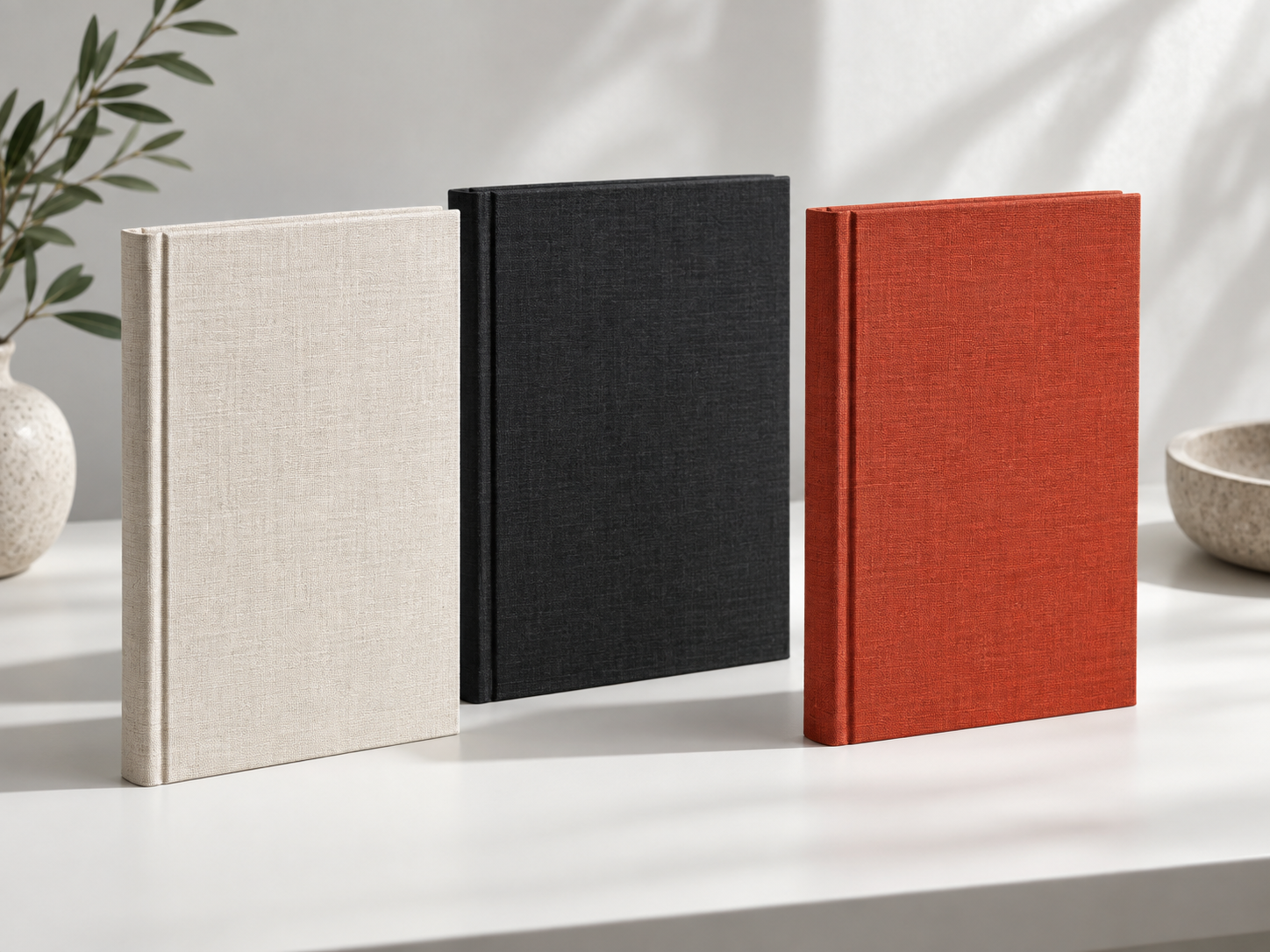
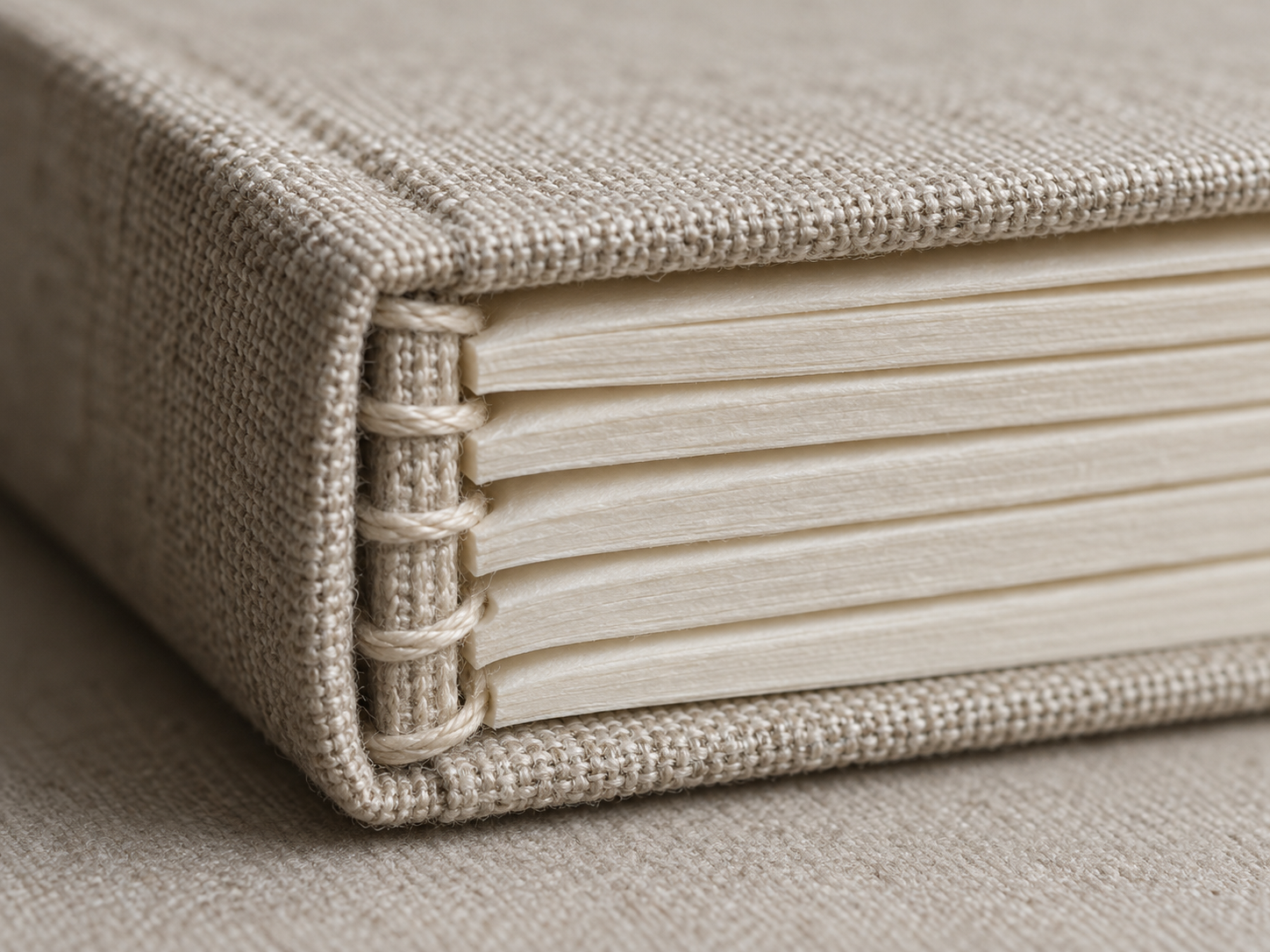
Paper / Cloth / Thread
The character of paper is in the small details: the edge of the block, the resistance under a pen and the way a page turns. Samples are the right place to compare those differences.
Make room for a thought
A sketch can become a plan. A sentence can become a story. We think paper is most useful when it gives an idea room to change, with formats that sit comfortably on a desk or travel in a pocket.
A notebook at the window, a sentence before the next meeting. The useful object is often the one that makes a small everyday ritual easier.

On the studio table, paper becomes a surface for looking, revising and connecting. Keep the marks that explain how an idea arrived.
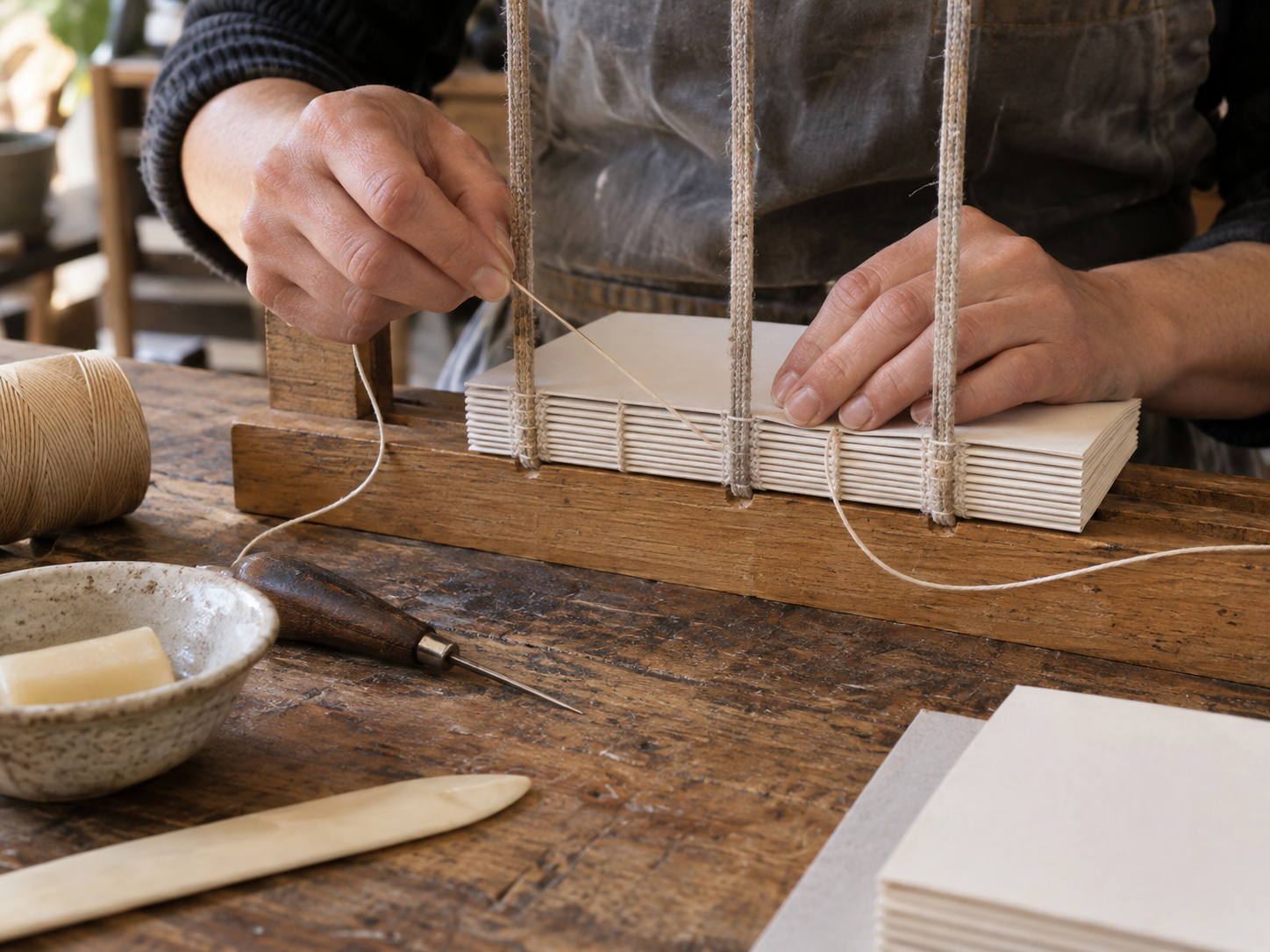
At the bookbinder’s bench
Paper grain, folding, stitching and cover materials work together. Our collection direction starts with these physical choices, then considers the finishing details that make the book yours.
Further reading
PAPER
A blank page leaves the structure to you. Dots, lines and grids can offer a quieter kind of guidance.
BINDING
Opening, turning and returning are part of using a notebook. Consider the binding alongside the cover.
ROUTINE
Early notes preserve the questions that started the work. Give them a place before polishing the answer.
The format tool uses ISO B5, 176 × 250 mm. Other B5 conventions exist; confirm the required dimensions in your production brief.
This is a stationery brand concept. The form prepares a local note and does not place an order.
Use, quantity, dimensions, ruling, paper preferences, cover material and binding are useful starting points.
FOLDEN / A conversation starts here
Gather the ideas that matter to you. Leave with a clearer starting point for your next conversation.