
LINENWORKS / IN CONTEXT
Behind every
fresh beginning.
A hotel’s linen routine begins long before the next guest arrives. Understand collection, handling and the flow of work across the day.
Plan your workflowTHE WORK BEHIND THE FINISH
A laundry room
that works together.
Receiving, sorting, washing, drying and finishing are connected parts of an operation. We start with that sequence and the people who work through it before discussing an equipment configuration.
FOLLOW THE LINEN
One room.
A connected process.
Explore the stages. Then describe the equipment, space and people involved in your operation.
Receive & sort
Record the types of linen, incoming volume and the space needed to organise each load.
EQUIPMENT FAMILIES
Equipment in
the right conversation.
Three directions for an initial commercial laundry brief. Actual capacity and installation requirements need an operating and site assessment.

IN DAILY OPERATION
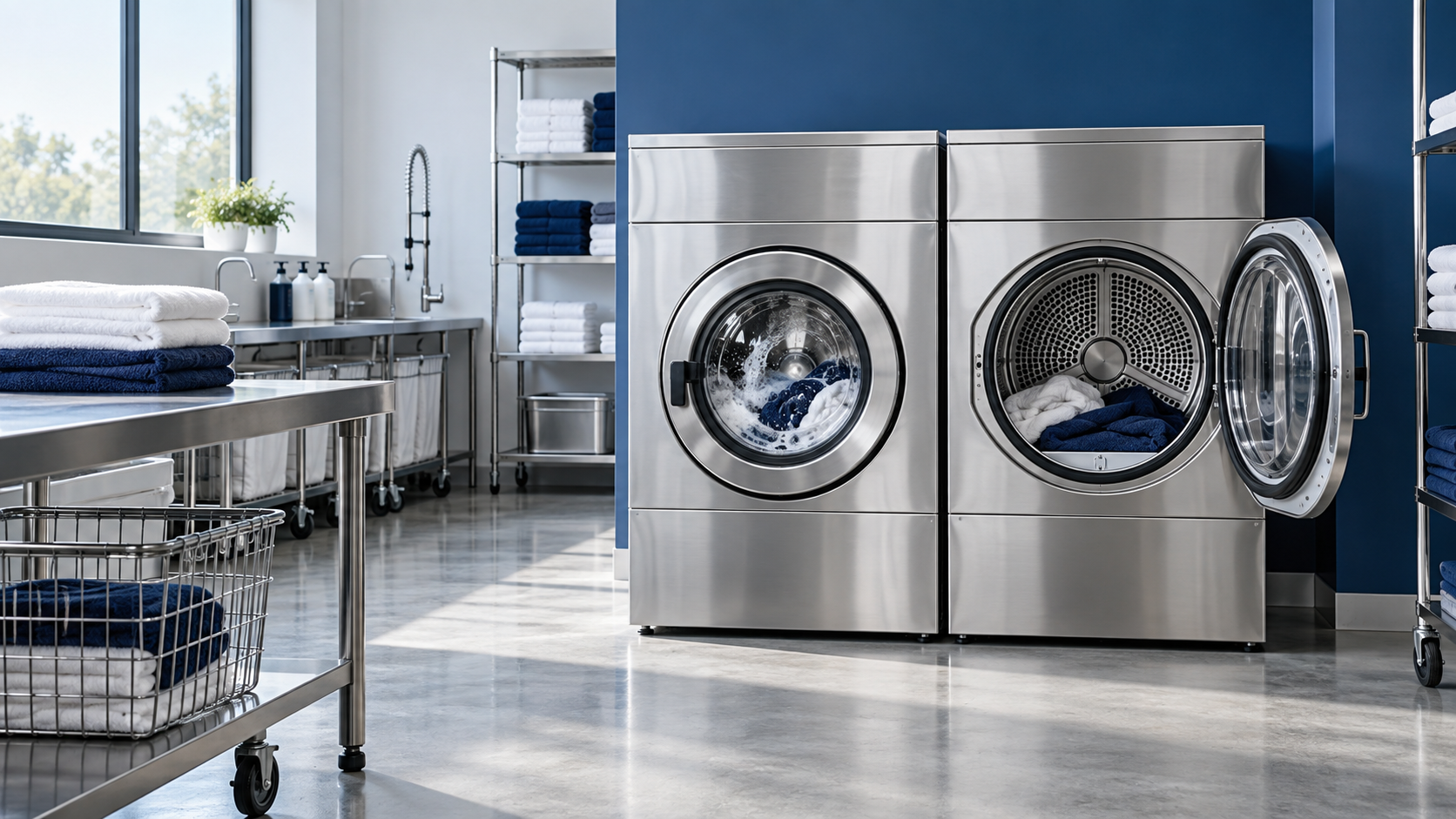
Give the process room.
Equipment, baskets and people share the same floor. The layout should be discussed as a sequence of activities, not just a row of machines.
Estimate a daily loadBEHIND THE EQUIPMENT
Built around
the working system.
A commercial machine brings a drum, frame, controls and service interfaces together. The complete project also includes installation, utilities and the operating routine around that equipment.
Map the linen
Record textile types, incoming patterns and the intended process.
Understand the room
Gather layout, access, services and the movement of staff and loads.
Review the equipment
Use the complete operating brief for qualified capacity and installation planning.


DESIGNED FOR THE ROOM
Inside the
everyday cycle.
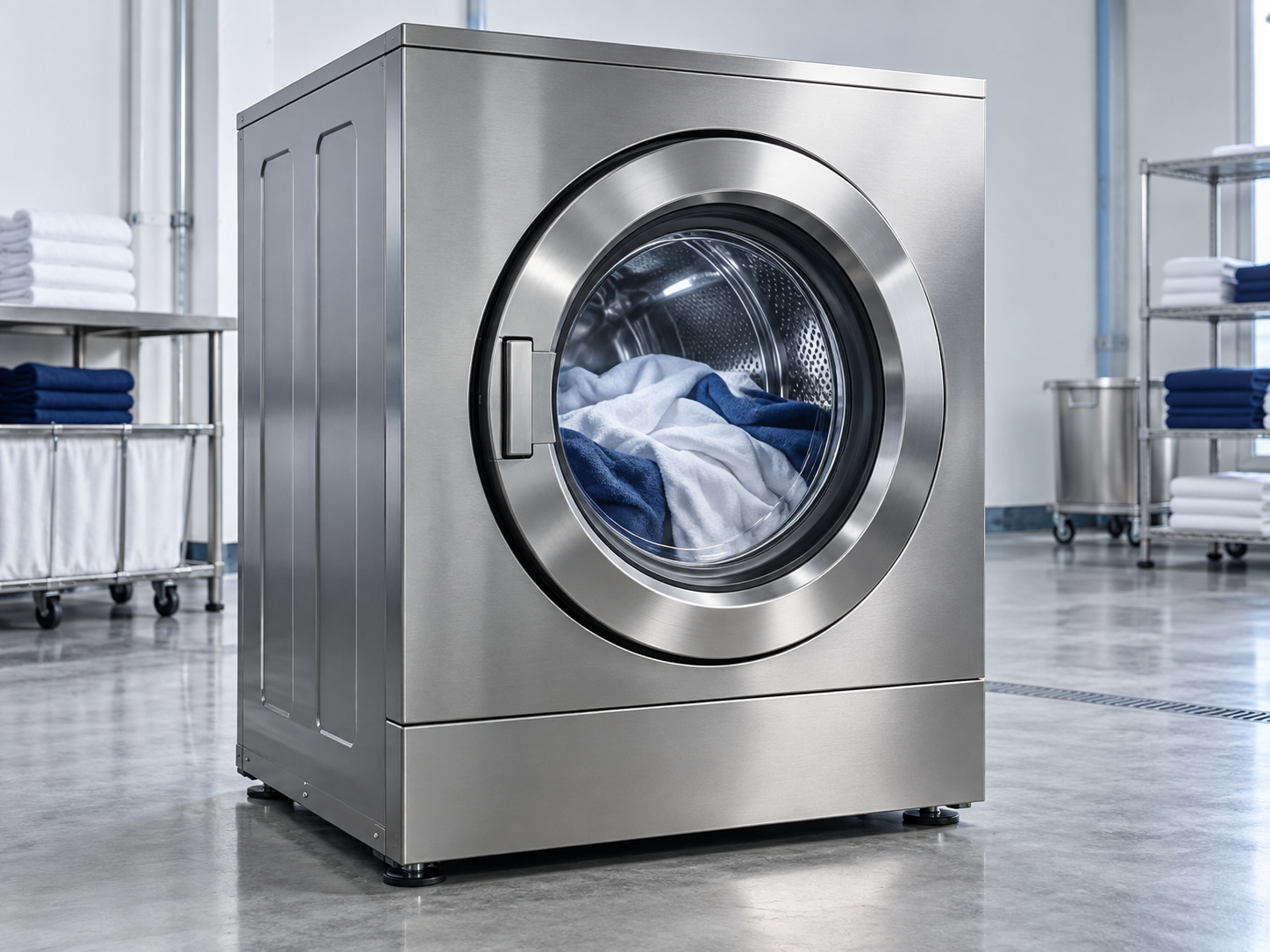
The drum, door seal and loading opening are physical parts of a larger process. Their actual specification and care requirements should be reviewed with the chosen equipment.
OPERATIONS NOTEBOOK
Notes from the laundry room.
SEQUENCE
Start at receiving.
The route taken by incoming linen helps explain sorting, storage and handling needs.
SPACE
Draw the movement.
A plan becomes more useful when it includes baskets, staff routes and service access.
WORKLOAD
Keep the assumptions visible.
A daily total is easier to discuss when the weight and number of loads are recorded beside it.
Before we begin.
Does the calculator choose a machine?
No. It multiplies two entered values only. Equipment sizing depends on the actual operation, textiles, cycle times and site.
Are savings or performance figures claimed?
No. This concept does not claim water, energy, throughput or cleaning performance.
Can I export my operating note?
Yes. Collect the calculation and project directions, then download a local text note.
LINENWORKS / A conversation starts here
Let’s define
the working day.
Gather the ideas that matter to you. Leave with a clearer starting point for your next conversation.